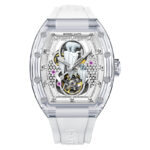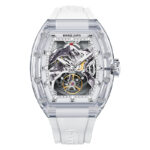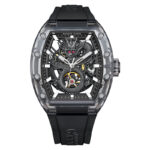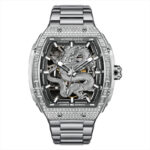

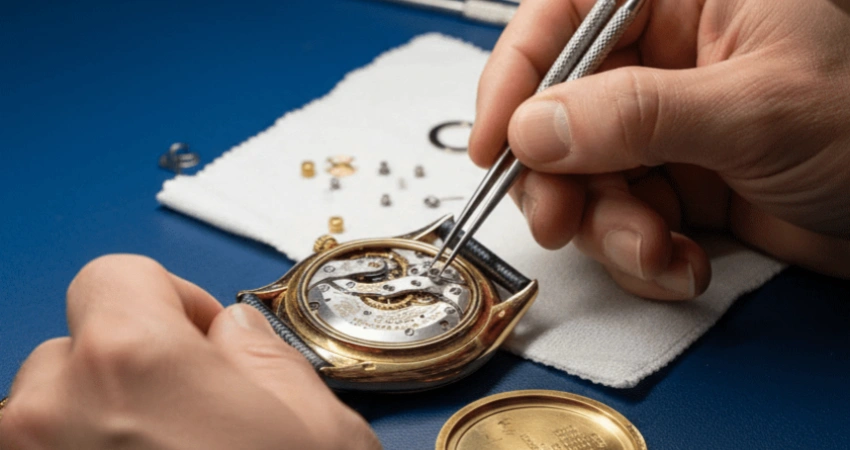
For many watch enthusiasts, the movement — the beating heart of a mechanical watch — is the most fascinating aspect of watchmaking. Composed of 200+ precision components working in perfect harmony, an automatic mechanical movement is a marvel of engineering that has been refined over centuries. In this article, we’ll take you inside the movement, explaining the key components, how they work together, and what makes a quality automatic caliber special.
The Basics: What is an Automatic Movement?
An automatic (or self-winding) movement is a type of mechanical watch movement that uses the natural motion of the wearer’s wrist to automatically wind the mainspring, eliminating the need for manual winding. This is achieved through a rotating weight called a rotor that pivots with wrist movement, transferring energy to the mainspring through a series of gears.
Automatic movements differ from manual mechanical movements (which must be wound by turning the crown) and quartz movements (which use a battery and electronic oscillator). While quartz movements are more accurate and require less maintenance, automatic movements offer a unique connection to the art of traditional watchmaking, with their visible gears, sweeping second hands, and the satisfying knowledge that your own motion powers the watch.
Key Components of an Automatic Movement
Let’s explore the essential components that make up an automatic mechanical caliber:
1. The Mainspring
The mainspring is the power source of the watch — a tightly coiled metal ribbon that stores energy when wound and releases it slowly to power the movement. In an automatic watch, the mainspring is wound by the rotor as you move your wrist. A fully wound mainspring typically provides 36-72 hours of power reserve, depending on the movement.
2. The Gear Train
The gear train is a series of interlocking gears that transmit energy from the mainspring to the escapement and hands. The gear train consists of several wheels, each with a specific number of teeth, carefully calculated to ensure the correct gear ratios for accurate timekeeping. The center wheel drives the minute hand, while the third wheel and fourth wheel drive the second hand.
3. The Escapement
The escapement is the heart of the mechanical watch — the component that regulates the release of energy from the mainspring and creates the characteristic ticking sound. The escapement consists of the escape wheel, pallet fork, and balance wheel. As the escape wheel turns, its teeth push against the pallet fork, which rocks back and forth, releasing one tooth at a time. This controlled release of energy is what keeps the watch running at a consistent rate.
4. The Balance Wheel
The balance wheel is the timekeeping element of the watch — a weighted wheel that oscillates back and forth at a precise frequency, typically 21,600 or 28,800 vibrations per hour (3 or 4 Hz). The balance wheel is attached to a hairspring — a tiny, coiled spring that causes the wheel to oscillate at its natural frequency. The consistency of this oscillation is what determines the accuracy of the watch. Even tiny changes in the balance wheel’s weight or the hairspring’s tension can significantly affect timekeeping accuracy.
5. The Rotor
The rotor is the defining component of an automatic movement — a semi-circular weighted disc that pivots on a central axle. As you move your wrist throughout the day, gravity causes the rotor to swing back and forth, winding the mainspring through a series of reduction gears. The rotor is typically made of a heavy metal like tungsten or gold to maximize winding efficiency. Many rotors are skeletonized or decorated to showcase the movement beneath.
6. The Winding and Setting Mechanism
The winding and setting mechanism allows you to manually wind the watch and set the time using the crown. When the crown is in the normal position, turning it winds the mainspring (though this is usually unnecessary with an automatic watch that’s worn regularly). Pulling the crown out to the first position may allow quick date setting, while pulling it to the second position disengages the movement from the hands, allowing you to set the time.
How It All Works Together
Now that we understand the individual components, let’s trace the flow of energy through an automatic movement:
- Energy storage: As you move your wrist, the rotor swings, winding the mainspring, which stores potential energy.
- Energy transmission: The mainspring unwinds slowly, turning the barrel, which drives the gear train.
- Energy regulation: The gear train transmits energy to the escapement, which releases it in controlled increments through the rocking motion of the pallet fork.
- Timekeeping: The pallet fork’s motion is regulated by the balance wheel and hairspring, which oscillate at a precise frequency, ensuring the escapement releases energy at a consistent rate.
- Display: The gear train drives the hour, minute, and second hands, which display the time on the dial.
This entire process happens continuously, with the balance wheel oscillating 4-8 times per second, creating the smooth sweeping motion of the second hand that is characteristic of mechanical watches.
What Makes a Quality Automatic Movement?
Not all automatic movements are created equal. Here are the factors that distinguish a quality caliber:
- Accuracy: A quality mechanical movement should be accurate to within +/- 10-15 seconds per day. Higher-end movements may be certified by COSC (Contrôle Officiel Suisse des Chronomètres) to an accuracy of -4/+6 seconds per day.
- Power reserve: A longer power reserve (48-72 hours) means the watch will continue running for longer after you take it off.
- Decoration: Quality movements feature hand-finished components with Geneva stripes, perlage (circular graining), anglage (beveled edges), and blued screws. These decorations are not merely cosmetic — they demonstrate the level of care and craftsmanship that went into the movement.
- Materials: Quality movements use high-quality materials like Glucydur (beryllium copper alloy) balance wheels, Nivarox hairsprings, and brass or German silver plates and bridges.
- Serviceability: A well-designed movement is easy to service, with readily available replacement parts and a straightforward disassembly/reassembly process.
The GATTI Approach to Movements
At GATTI, we believe that quality mechanical watchmaking should be accessible to everyone. Every GATTI watch features a quality automatic mechanical movement with a smooth sweeping second hand, reliable accuracy, and a 36+ hour power reserve. Our movements are carefully regulated before leaving the factory to ensure consistent timekeeping performance.
Many of our watches feature skeleton dials and exhibition casebacks that allow you to admire the movement in action — the rotating rotor, the oscillating balance wheel, and the meshing gears that bring your watch to life. We believe that being able to see and appreciate the movement is one of the great joys of mechanical watch ownership, and our skeleton designs put that beauty front and center.
Whether you’re a seasoned watch collector or purchasing your first mechanical timepiece, understanding how the movement works adds a new dimension of appreciation to your watch. Every time you glance at your wrist and see the second hand sweep smoothly across the dial, you’ll know that beneath the surface, 200+ precision components are working in perfect harmony — a tiny mechanical orchestra performing the timeless symphony of time.